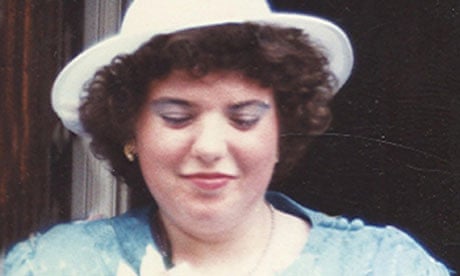
The home secretary Theresa May is launching her criminal justice white paper, pledging to crack down on "yobs" responsible for antisocial behaviour against law-abiding individuals. It's a populist "three strikes and you're out" approach, with May pledging that police will be forced to act if they receive three complaints from one individual or five complaints from different homeowners about antisocial behaviour. The coalition says that such reforms will prevent tragedies such as that which befell Fiona Pilkington, a mother with mental health concerns and two disabled children, Anthony and Frankie. After 11 years of harassment, which she had reported to police 33 times without significant intervention, she killed herself and Frankie in October 2007.
Having investigated the Pilkington case and many others involving disabled people targeted by groups over the last five years, I just don't believe that "Fiona's law" will prevent other such crimes happening. Laws created in reaction to moral panics, particularly when linked to one specific case, rarely work. Megan's law, introduced by President Clinton in the US after the rape and murder of Megan Kanka by a convicted paedophile, allows parents to check where sex offenders live. But critics of the law say that it has led to vigilantism, low compliance with registration and sex offenders travelling away from their local area to target children. The Dangerous Dogs Act, passed in August 1991 in the UK after Rukhsana Khan was mauled by a dog that summer, has been criticised for failing to protect children and other vulnerable groups and for focusing on just four breeds of dog. Sentencing guidelines for it have recently been overhauled.
There is also no definition as yet of what "police action" will mean. Will it mean police recording each complaint as an incident? Will it mean investigation, and if so, to what level? Police officers use their judgment at the moment as to how to log an "incident" and whether or not to "crime" a report. Sometimes – far too often when it comes to crimes against disabled people – they get it wrong, but forcing police officers to "act" after three complaints, without any discretion, is a dangerous move. In Pilkington's case, for example, a number of children from different neighbouring families were responsible for the harassment. What if five of them had ganged up on her, and complained about her? She, then, would be seen as the problem, rather than them – which would legitimise, rather than challenge, the law of the lynch mob.
Neighbourhood disputes often result in allegation and counter-allegation. In a case I've been investigating in Camden, a young man with learning disabilities and his family have been systematically targeted by a number of neighbours, and their teenage children, at home and on the high street. The case has dragged on, like that of Pilkington, for 11 years. The local police are "acting" – some incidents have been logged, but without evidence from neutral eyewitnesses it has been impossible to bring a case. If their neighbours were quicker off the mark in going to the police, under Fiona's law that family might well be blamed, rather than those responsible for a sickening campaign of harassment against them. We shouldn't introduce legislation that mimics some suburban version of the wild west, where the neighbour who is quickest off the draw gets to administer rough justice.
Nearly one-third of people who contact the police about antisocial behaviour are disabled and more than one-third of repeat victims have disabilities, according to the Stop The Rot report, published in autumn 2010 by Her Majesty's Inspectorate of Constabulary. Disabled people are, therefore, disproportionately represented as victims of antisocial behaviour – which suggests that targeted harassment against them is being wrongly classified as antisocial behaviour. Focusing, therefore, on antisocial behaviour as a key crime priority, which is seen as a motiveless crime by mindless yobs, affecting all good citizens equally, will fail people who are being deliberately targeted. This focus will skew the reporting of the crime – and probably drain money and time away from the real problem. Spending money on updating police IT systems so that more forces can identify and prioritise repeat callers, particularly those most at risk of harm, would be far better.
That's the bad news about the white paper, but there is one piece of good news. The proposal to replace antisocial behaviour orders with crime prevention injunctions, which will carry effective sanctions if breached, could work. But I see no reason to lower the burden of proof for them – otherwise innocent victims could end up being injuncted, rather than those responsible for the harassment. In the Camden case above, police and other agencies warned the innocent family that they could face action if they continued to complain and to "harass" their neighbours – by, for example, mowing their lawn.
This was after the father had had his ribs broken in an unprovoked attack by the neighbours. Fiona's law has many pitfalls. I suspect it will fail the very people it is supposed to protect.



